
Thermal Break
What does it consist of?
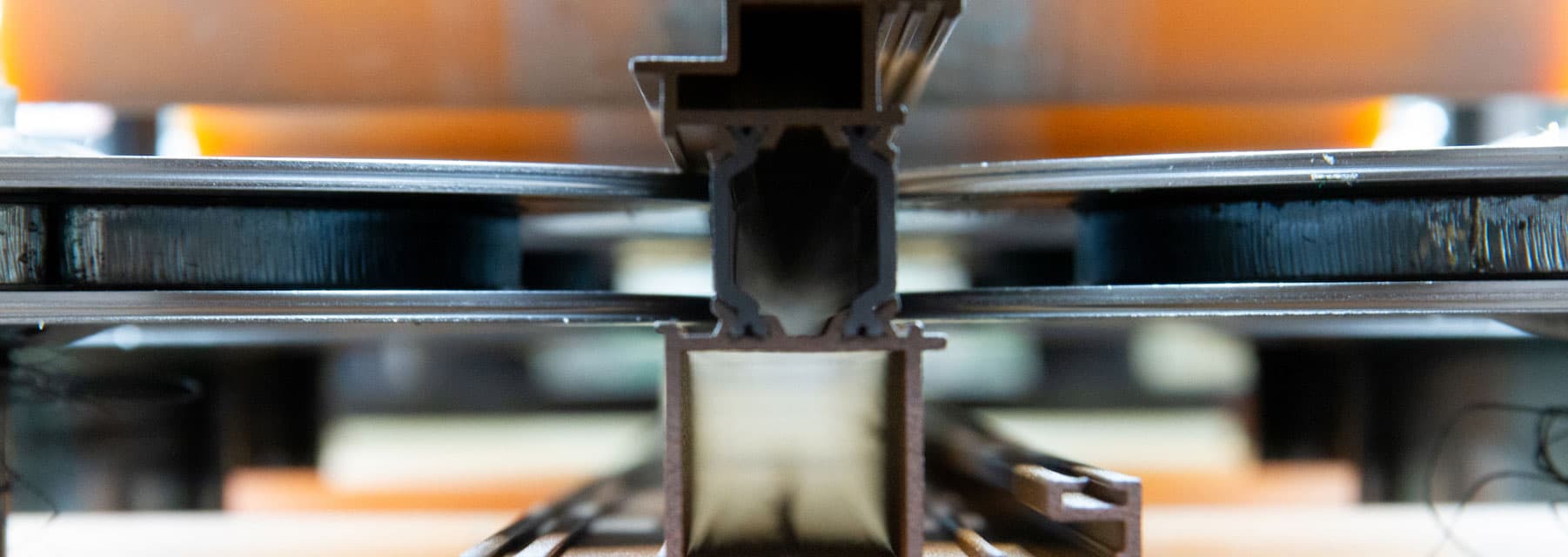
The assembly of profiles with thermal break is the union of two semi-profiles using polyamide molding, creating a single profile with very special features:
• The ability to use profiles with two colors, one outside, another inside;
• The creation of a barrier who breaks the thermal conductivity of aluminium, increasing the thermal and acoustic comfort and decrease energy consumption.
At Anicolor, we have a firm commitment to efficiency and performance. Our thermal break systems are the result of years of technical development and rigorous laboratory testing, meeting the most demanding criteria for insulation, airtightness, wind resistance, and durability.
• The ability to use profiles with two colors, one outside, another inside;
• The creation of a barrier who breaks the thermal conductivity of aluminium, increasing the thermal and acoustic comfort and decrease energy consumption.
At Anicolor, we have a firm commitment to efficiency and performance. Our thermal break systems are the result of years of technical development and rigorous laboratory testing, meeting the most demanding criteria for insulation, airtightness, wind resistance, and durability.
ADVANTAGES
Superior thermal insulation
The main advantage of thermal break is its ability to drastically reduce heat transfer. In winter, it prevents heat from escaping indoor environments. In summer, it blocks the entry of external heat. This thermal regulation results in much lower energy consumption for heating or air conditioning systems, ensuring savings and comfort.
Acoustic insulation
Although sound insulation also depends on the thickness and type of glass, thermal break systems tend to offer better acoustic performance. The barrier created by the polyamides, combined with highly airtight frames, significantly reduces noise propagation, especially in urban areas, airports, or industrial zones.
The main advantage of thermal break is its ability to drastically reduce heat transfer. In winter, it prevents heat from escaping indoor environments. In summer, it blocks the entry of external heat. This thermal regulation results in much lower energy consumption for heating or air conditioning systems, ensuring savings and comfort.
Acoustic insulation
Although sound insulation also depends on the thickness and type of glass, thermal break systems tend to offer better acoustic performance. The barrier created by the polyamides, combined with highly airtight frames, significantly reduces noise propagation, especially in urban areas, airports, or industrial zones.

